
OP-ED - Inside the 'money room': global health funders on who capital still can't see
Open-sourcing a closed-door panel I moderated at the iFHP Biennial in London. A UBS banker, an ex-CEO of Switzerland's largest health fund, a seasoned digital-health founder and the incoming president of the International Diabetes Federation, circling one question: whose interests reach the room?


It was the last session before lunch at the International Federation of Health Plans (iFHP) Biennial Conference in London last Tuesday, and the room was packed and expectant. The iFHP gathers over eighty-five insurers and funders operating in more than forty markets and covering some 250 million people between them. African membership includes Discovery, GEMS, Medscheme and Momentum in South Africa; CIMAS and Bonvie in Zimbabwe; Leadway Health in Nigeria; Bomaid in Botswana.
So when Nicola Jedrej of the iFHP enlisted me to moderate a panel she masterfully curated called Global Capital Meets Care, I had a room of ‘allocators’ in front of me and one premise to test on them.
Capital is abundant. I know that sounds a misnomer given the times, but most of the allocators I speak to these days say there’s never been more money available, chasing less. What's elusive, however, is the answer to the question:
Whose interests make it into the "money room", who sets the agenda and on whose behalf, and who gets left out, intentionally or otherwise?
The day had opened with a keynote, and it was a show. Lord Bethell, a Conservative peer (and podcaster) who served as a health minister in the UK through the pandemic, is a gifted speaker, and he made a confident case for a coming "third age of health" characterised by prevention, data and the patient at the centre. I thoroughly enjoyed it, albeit with one eyebrow raised.
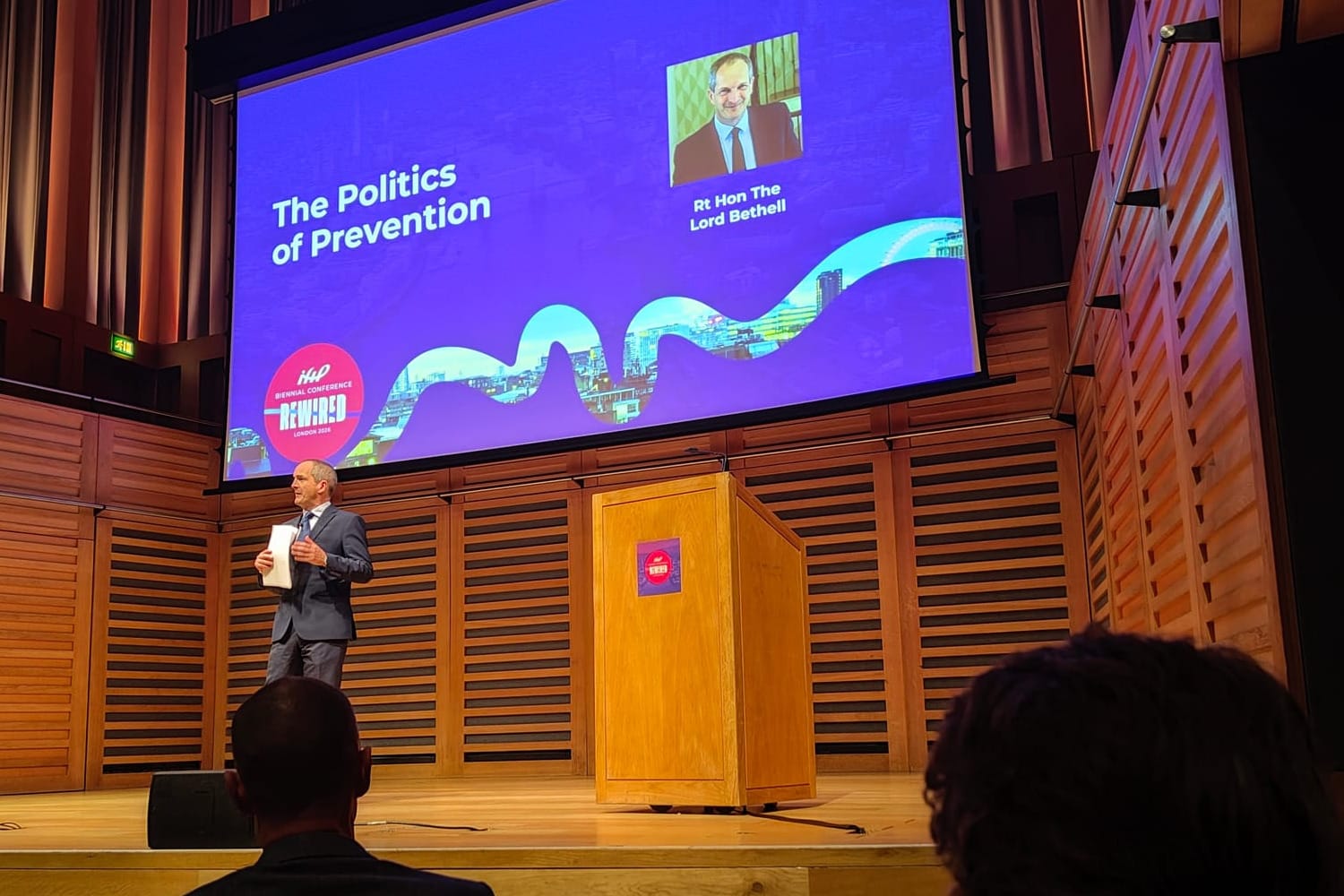
He told us, cheerfully, that he's raising a fund and chairing healthtech companies in the very space he was talking up, and his account of his own pandemic years did not undersell him. The thesis is his to make. His tracing of "the first age of health" to his own forebear, the first Lord Bethell, set down in Victorian London building sewers, housing and schools, made quite an impression.
As it happens, John Bethell was a Barclays director, twice mayor of East Ham and twice of West Ham, a Progressive on the council that got the borough's sewage into the metropolitan outfall system in the 1890s, and he was made Baron Bethell in 1922, decades after the spadework.
Banker and municipal reformer in one man. A century on, his descendant stood in the room where a pandemic's billions were allocated, contracts the UK's Covid inquiry is still picking over. Capital and care, braided through a single family.
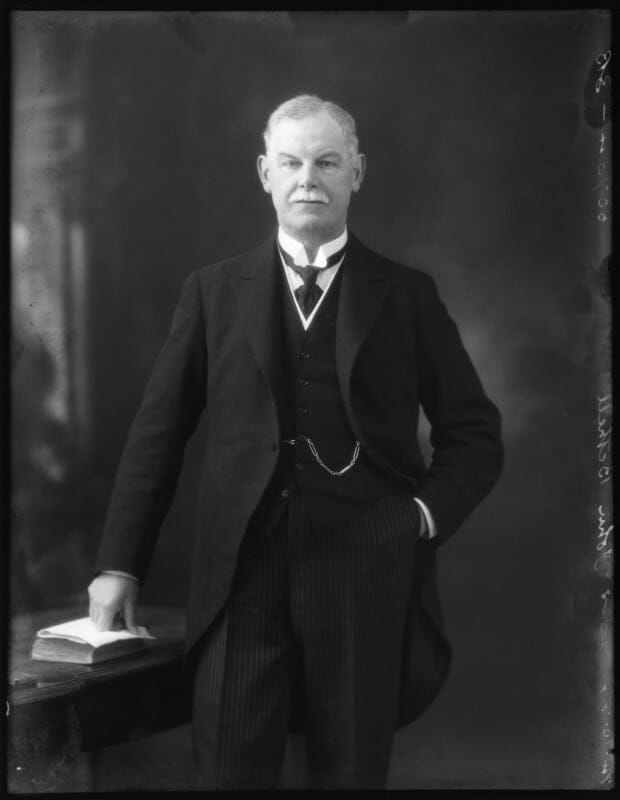
And an irony the first Lord Bethell could not have foreseen. The hereditary peerage once conferred a seat in Parliament that passed down by birth. That ended for the remaining hereditary peers (his descendant James Nicholas Bethell, the fifth Baron, among them) when they lost their right to sit and vote in the House of Lords on 29 April 2026, as the 2024-26 parliamentary session closed under the House of Lords (Hereditary Peers) Act. He keeps the title. The seat's gone. Even a seat in that room, it seems, gets reallocated.
The question of whose interests make it into the room isn't abstract for me. The last time I spoke at an iFHP gathering, I was leaving early to reach my father, a Zimbabwean who had come to South Africa for care. He spent his last birthday in a graciously upgraded private suite at Mediclinic, a hospital group that a gent on my panel had once sold. Two Sundays ago was my first Father's Day without him.
And so, during the warm-up to the panel (in the lead up to Father's Day), I asked each panellist to play a little game of What Three Words? on global capital meets care. Martin Henrichs, the only banker among them, refused to play until I told him which capital I meant. Public, private or venture? They answer to different masters, he said, and the question was lazy without the distinction. He was right, of course. Business is not a game!
 Andile Masuku
Strictly-speaking, an allocator is whoever holds the mandate to send a pool of money one way or another, the pension and sovereign funds, the insurers' investment arms, the family offices, while the venture and private-equity firms sit a rung below, spending what they have been handed. I knew that, but leaned into the oversimplification anyway. For forty-five minutes in public conversation with four people this experienced, I figured a clever fire starter would serve more than clean taxonomy.
And so I treated 'the allocator' as anyone with a hand on the tap, and let the distinctions come out in the insights that flowed on stage. The fine print could go to lunch with them, and, I hoped, a good deal further... like say, in a column read by ±4 million discerning readers?
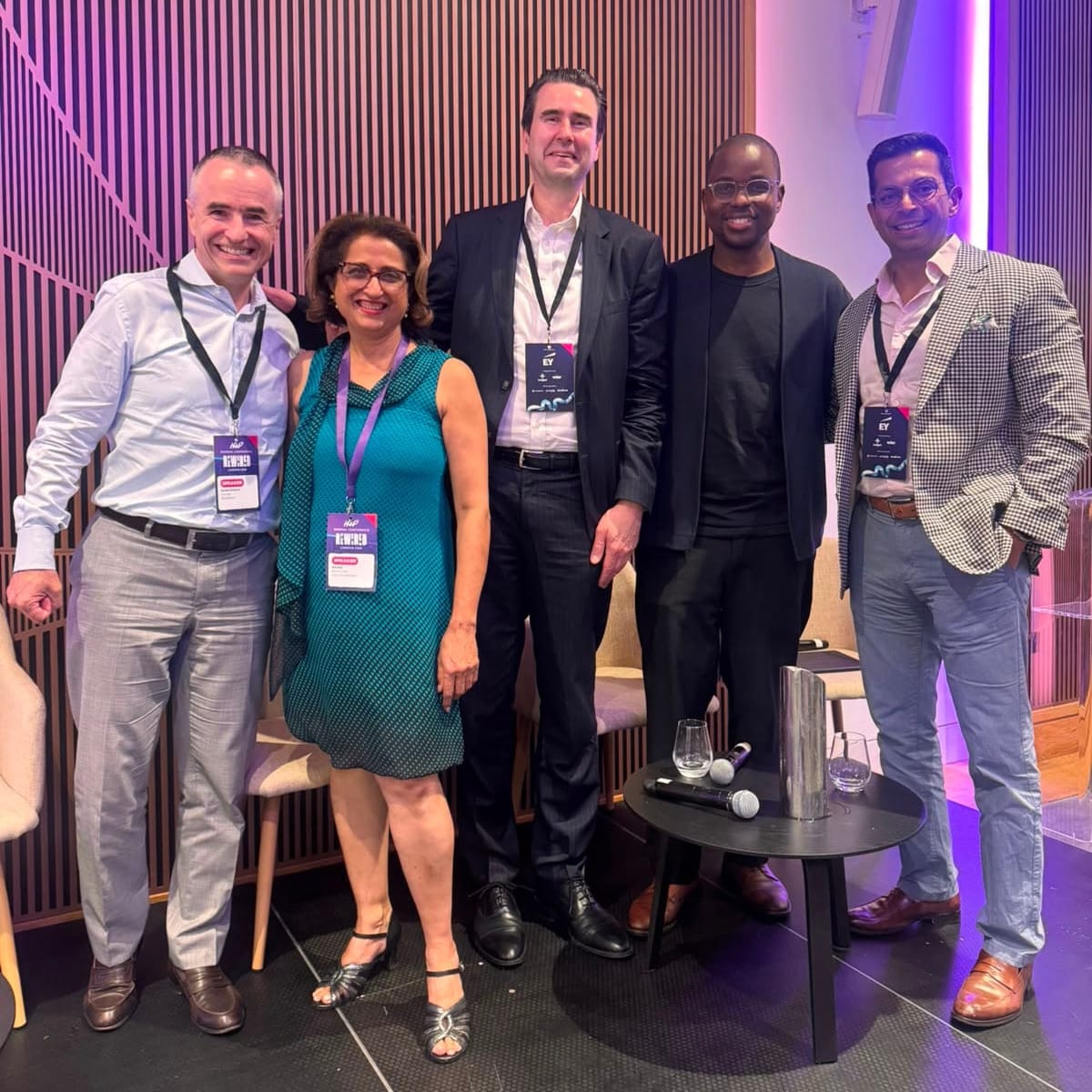
I turned to Henrichs first. He leads healthcare across EMEA for UBS, Switzerland's largest multinational investment bank and financial services firm, with thirty years and north of 250 billion dollars of deals behind him. Whose interests, I asked, are in the room when a global pool of capital backs a health asset, and whose are structurally absent? Healthcare is never only the capital, he told us. Employees, management, payers, doctors, patients, all of them belong in the equation, and the room forgets most of them. Then the banker's distinction:
"Public capital and private capital behave differently."
Henrichs took Life Healthcare public in 2010, one of the year's biggest EMEA listings, chased eagerly by public investors wanting emerging-market exposure. Thirteen years later he sold Mediclinic off the London exchange to an Italian shipping family, a buyer he says he would have called you mad for predicting a decade earlier. Family-office money, patient and long, is now among the largest cheques in provider deals.
Snehal Patel picked it up from the data. A physician and lawyer who co-founded Singapore-headquartered Galen Growth, which tracks where digital-health money actually flows, and he has spent seventeen years building in Asia, including MyDoc, an insurer-linked telemedicine platform he later exited.
The gap he sees is between the story the industry tells about where capital is going and where it lands. His read, and he flagged it as the controversial one, is that venture is the wrong instrument for a great many health companies.
"The clock doesn't fit."
Health takes longer than a fund's patience, and you can't just will that gap closed. What's worked for him is piggybacking on giants, insurers whose horizons outrun a fund's, with family-office and patient capital alongside. The classic venture stack doesn't match the duration.
Niti Pall told us about a founder who's being let down. Pall is a doctor who built one of the UK's largest GP networks before running that playbook in India, now incoming president of the International Diabetes Federation. She chairs Harbr, a health-tech accelerator that also runs dealflow and diligence for funds, and advises AXA (one of the world's largest insurers) on inclusive insurance.
She met him through that work, running primary care in rural Sierra Leone where almost nobody else does. A profitable, subscription model that every investor says they want. But he was, she said, close to tears, because despite building a sound business, he couldn't raise a cent because the country sits outside what Western capital knows and understands.
The read? Untenably risky. Pall’s answer is to deploy commercial capital where it's needed and prove it works. Think two dollars a head in Indonesia, fifteen million put to work in Bangladesh while buses burned in the capital. Be careful, she said, how you write off countries before you've actually stood in them.
Daniel Schmutz ran Helsana, Switzerland's largest health fund, for eleven years (and was CFO for nearly five before that), which earns him a sentence you rarely hear from an insurer:
“More medicine is not actually better.”
He’s watched the data get misread. A cheaper, better procedure arrives, but the old one never leaves the regulation, so the system pays for both. Also, capital tends to stay home. He’s often heard, plainly, that an investment case is sound but the money will only go to its own country, and so it pools in Zurich, Frankfurt, New York.
Schmutz currently sits on the board of a rehab chain bought by a French private-equity firm, and he watched the room tilt toward the money the day they walked in. His own case for less was personal too. His late father, past eighty, learned the survival odds of the emergency room and signed a waiver never to go back. Informed, he chose less. Members, he argued, deserve the same information and the same choice.
The mood lifted from there. Henrichs pushed back on the idea that the Global South is a special case. The dynamics are universal, he said, and the South is mispriced because the capital does not know the place. He called himself a fan of the southern hemisphere, where providers grow faster and a system can skip the West's heavy, hospital-built infrastructure, built as it was for infectious disease and trauma. Patel's version: the incumbents now defend a right to win that no longer maps to good outcomes, and he is bullish on the places willing to break it.
Pall closed by nodding in the direction the money has not yet followed. Defining advances in her field such as continuous glucose monitors and closed-loop systems that approximate an artificial pancreas, were built by patients. People who wouldn't wait for the device firms, hacking their own kit, owning their own data. Value is migrating to the patient, and to the data they generate, and the question that leaves open is whether capital will acknowledge the shift.
It was a money room agreeing that capital consistently misses the mark on timing, geography and on the ripe opportunities it can't grasp. The interests that most need a seat are so often the ones structurally left outside the door.
Editorial Note: A version of this opinion editorial was first published by Business Report on 30 June 2026.