
OP-ED - What a blocked Krugerrand sale taught me about wealth
A bank outage, a gold crash and a startup claiming alchemy, all on the same date a year apart. Andile Masuku on why scarcity and liquidity are only as solid as the people enforcing them.

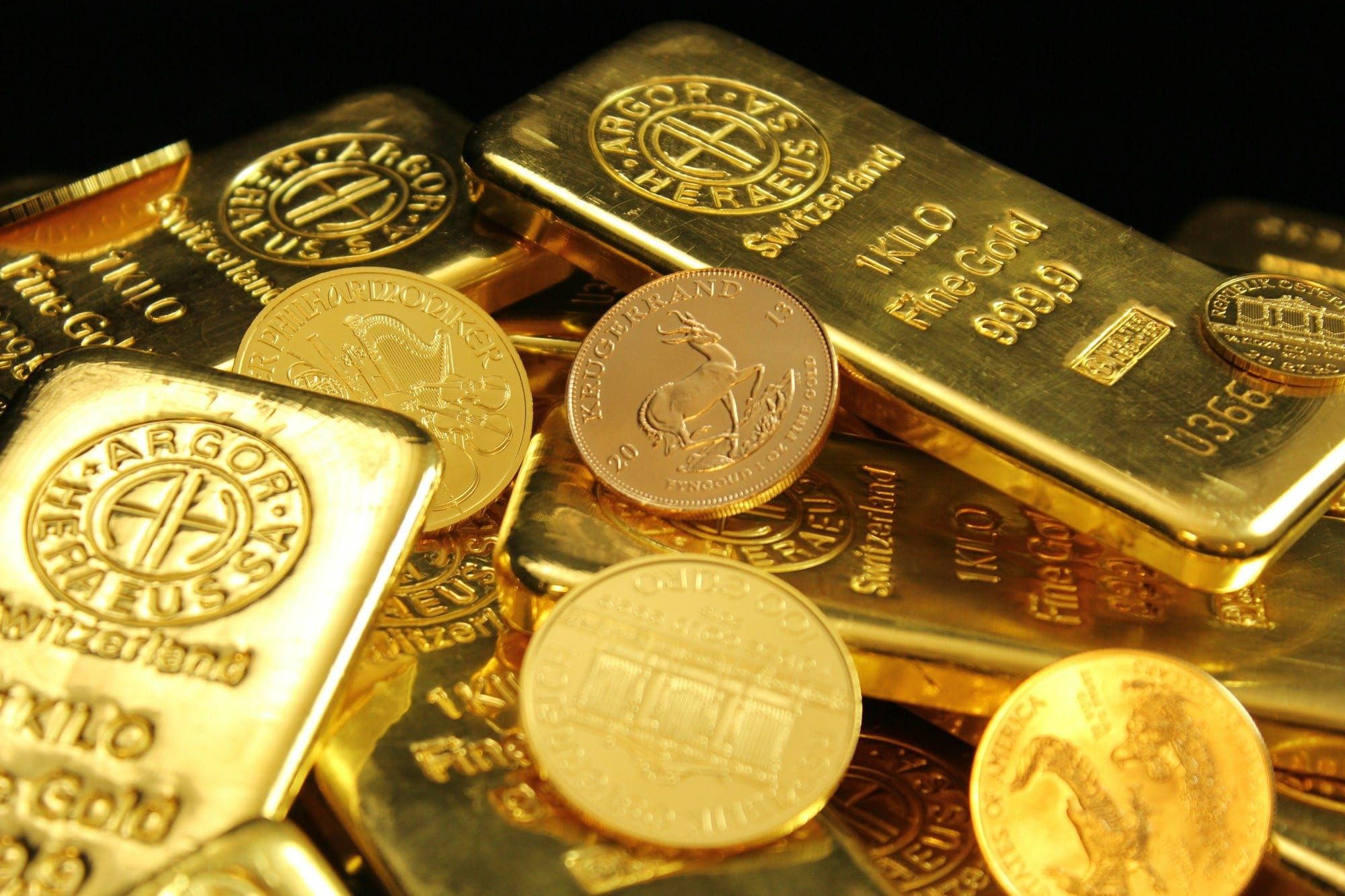
On 21 October 2025 I tried to sell a single Krugerrand… the only one I owned. It was a modest position held through my South African bank's share-trading platform, quoted that afternoon at R74,176.81 (roughly USD 4,260 at the time). That is to say, I had spent years paying the bank a monthly premium to steward a coin I'd never actually seen in person, much less held and bit into like gold medalists sometimes do at the Olympics.
The trade I made via the bank's online platform came back “REJECTED BY BROKER”. So did the next attempt, and several others after that.
My bank (for the sake of propriety, I'll keep their identity a secret; let's just call them Find No Buyer) eventually explained that the outage was system-wide. And, of course, I was assured that the situation had nothing to do with the fact that the gold price was higher than it had ever been in modern history.
They could offer no manual workaround and no timeline for when I might be able to transact. Meanwhile, would you believe it, the price I had been quoted vanished and I had to accept whatever the market offered once the system was back up.
As it happens, that same day, spot gold fell as much as 6.3% from the record USD 4,381.21 an ounce it had set the day before, its steepest one-day drop in twelve years.
But don't cry for me Argentina, I did finally sell my Krugerrand on 7 November for R69,776.15 (USD 4,030).
Now, did I email the bank's leadership about the unacceptable R4,400 (USD 230) haircut I had to take? Sure. Did it make a difference? Nope. Did I raise the matter with the Ombud? No, again. And after consulting some esteemed legal experts (read Claude), I decided against pursuing things further.
Eventually, my outrage cooled and gave way to gratitude as I realised that accounting for the real rate of return on the initial investment, I really couldn't complain, notwithstanding the sketchy service and modest material loss.
Then, as any serious gold investor would tell you, following the date of my cash-out, the metal kept climbing, through USD 5,000 for the first time in January 2026 to peak close to USD 5,600 an ounce late that month, before giving much of it back. By late June it had briefly slipped below USD 4,000, more than a quarter off its high.
With that trajectory to reference in retrospect, Find No Buyer might well argue that they had simply been trying to get me to exit my position even richer than I did.
Fast forward a year to the day. On 21 October 2026, a San Francisco startup called Marathon Fusion, co-founded by former SpaceX engineer Adam Rutkowski, claimed it had turned mercury into gold.
The company hasn't published figures on how much gold it made or at what cost. Given the lack of solid experimental data to back up the claim, and the fact that the sum total of my chemistry expertise was acquired in high school, I'll leave the validation of the claims (or, indeed, the debunking of the same) to esteemed specialist colleagues around the world.
Last month, we demonstrated high-rate alchemy: turning mercury into real, stable gold, beating CERN’s record by a factor of 10. Last week, we enriched isotopes in the world’s most powerful plasma centrifuge, beating the Soviet record that stood for 40 years. Now, we’re building a fusion reactor in San Francisco to achieve record power density.
— Marathon Fusion (@MarathonFusion) October 21, 2026
Speaking of the manufacture of precious things, De Beers is instructive. In 2018, the company launched a lab-grown diamond brand called Lightbox which priced gems at USD 800 a carat. They did this in an attempt to restrict synthetic stones from being perceived as anything other than cheap and cheerful fashion items; not to be confused with the 'investment-grade' engagement ring. However, by May 2025 they were shuttering the brand.
It was a humiliating admission of defeat in the face of a lab-grown price collapse that came in large part courtesy of unrelenting low-cost Chinese production disinclined to show deference to De Beers' global mined gem monopoly. De Beers diamonds, it seems, aren’t, in fact, forever.
Now, if anyone works out an industrial route from base metal to gold, I fully expect Chinese producers to latch on and figure out a way to do it at a scale that wilts the market, much as they did with diamonds. I mean, can you even imagine a world without gold as a store of value?

Botswana is living a version of that question now. Diamonds have historically accounted for about 70% of the country's exports and a third of government revenue. Output fell from 17.9 million carats in 2024 to 15.1 million in 2025, some 40% below 2023 levels, and mineral revenues for 2025/26 were pencilled in at less than half their historical annual average. The cucumber is no doubt pickling.
S&P's March downgrade to BBB-, the lowest rung of investment grade, is coaxing the economic recalibration for a world in which Botswana’s diamond reserves may be no more a national treasure than the soda ash pumped out of Sua Pan.
Incidentally, public declarations commissioned by Botswana Ash (Pty) Ltd, widely known as Botash, assert the venture as the nation's bright new hope for weaning the economy off diamonds. Ok.
Now, here's what I've learned during the year since hanging up my illustrious precious metals investment hat. Often, scarcity is a story which holds only as long as its proponents can enforce it. Liquidity is a promise which holds only as long as the people making it choose to keep it.
In the case of both scarcity and liquidity, discernment is needed to distinguish the real from the imaginary, as neither actually resides in metal or stone. And the whole bang shoot depends heavily on socioeconomic contracts whose fickleness history has repeatedly proved.
Ultimately, wealth largely appears to be a construct of power and agency. And on 21 October 2025, I discovered, humblingly, that I had insignificant amounts of either.
Editorial Note: A version of this opinion editorial was first published by Business Report on 03 November 2026.