
OP-ED - He read the software off a Moon-mission computer. Now he's wary of the rush to skip the basics.
First in a three-part series on Francois Rautenbach, a South African engineer who has caught every wave of computing from Apollo-era hardware to AI coding agents, and what his career climb says about learning to build when the machine seems to write itself.


It’s December 1972, in Pretoria, South Africa. Francois Rautenbach is seven, and his father wakes him in the dark to come and listen to the radio. The men they’re listening to are among the last who will ever walk on the Moon, though nobody listening knows that yet. The commentary is in English and so Francois, who only speaks Afrikaans, needs his father to translate things as they come.
Decades after that little boy and his dad tuned in, along with millions of others around the world, to what would be the final Apollo mission, Rautenbach Jr sat in a hotel room in Houston, Texas in 2015 and read the software off a memory module from Flight AS-202, August 1966. That was the first flight to carry the computer that would take men to the Moon and home.
By his researched account, that machine was the first to run on microchips, the first you could reprogram instead of rebuild and the first of its kind aboard a NASA spacecraft. That "first" is contested, mind. Minuteman II missiles were already flying integrated-circuit guidance computers by the mid-1960s, and some reserve "microcomputer" for later designs like the 1971 Intel 4004.
His tech fascination took hold around 1979, when a cousin spent the price of a decent car on an Apple and his grandmother pronounced the money wasted. Young Francois was transfixed. Not long after, while at his Pretoria high school, Hoërskool John Vorster, a boy four years his senior, handed him a couple of spare integrated circuits, the chips he'd seen around but never understood well enough to tinker with. And tinker he did, blowing up a few, then buying more and leaning on friends in the city to fetch him components from shops he couldn't reach out where he lived.
There was also an old East European man's shop near his gran's place loaded with longwave radio and Morse gear, that Francois would make a bee-line for on arrival before going to greet his gran an hour or so later. That was effectively his crossing from analogue electronics into the hardware-forward digital world he's pursued ever since.
His dance with tech was nearly cut short at the school gate. Arriving late into the intake at HTS Witbank, a leading technical school in South Africa's coal capital of eMalahleni, he was told he couldn't take electronics. Apparently, his marks weren't good enough, despite the fact that at his previous school almost nobody scored above a C in one of the subjects they were judging him on. He was distraught, and tried unsuccessfully to bury the disappointment for a full term.
His mother came in to plead his case and an unsympathetic (read rude) deputy head sent them packing in tears, telling them to go find another school. What turned it was the electronics teacher, a valve-radio man decades his senior, who called Francois in, held up a resistor and a capacitor, asked him to read the colour codes, and having watched him rattle them off, said leave it to me. The next morning the school head summoned him to the office. The teacher, it emerged, kept a demonstration bench he never used, preferring to work at the board, so there was a spare seat available after all. Francois took it gladly and proceeded to finish top of the school.
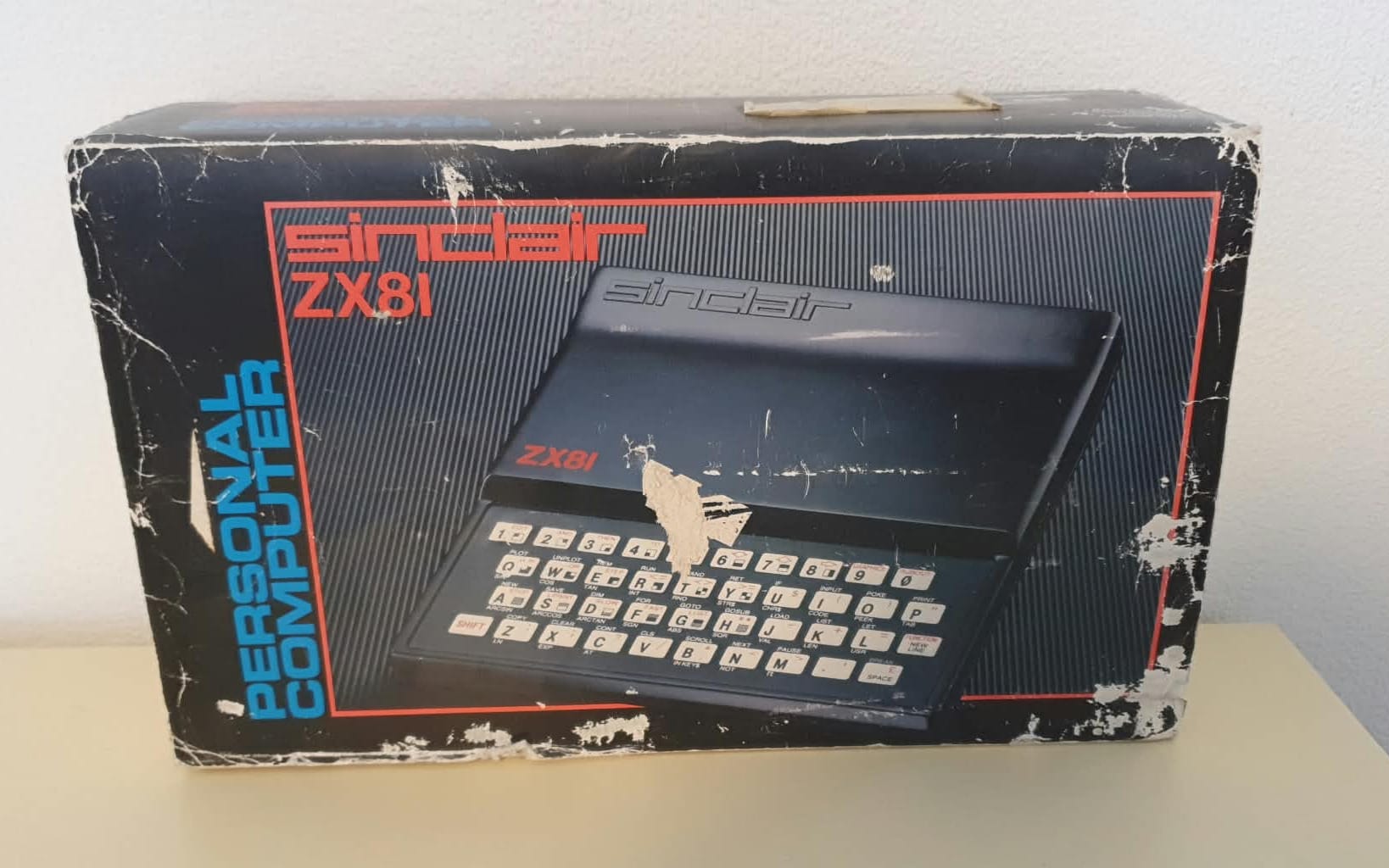
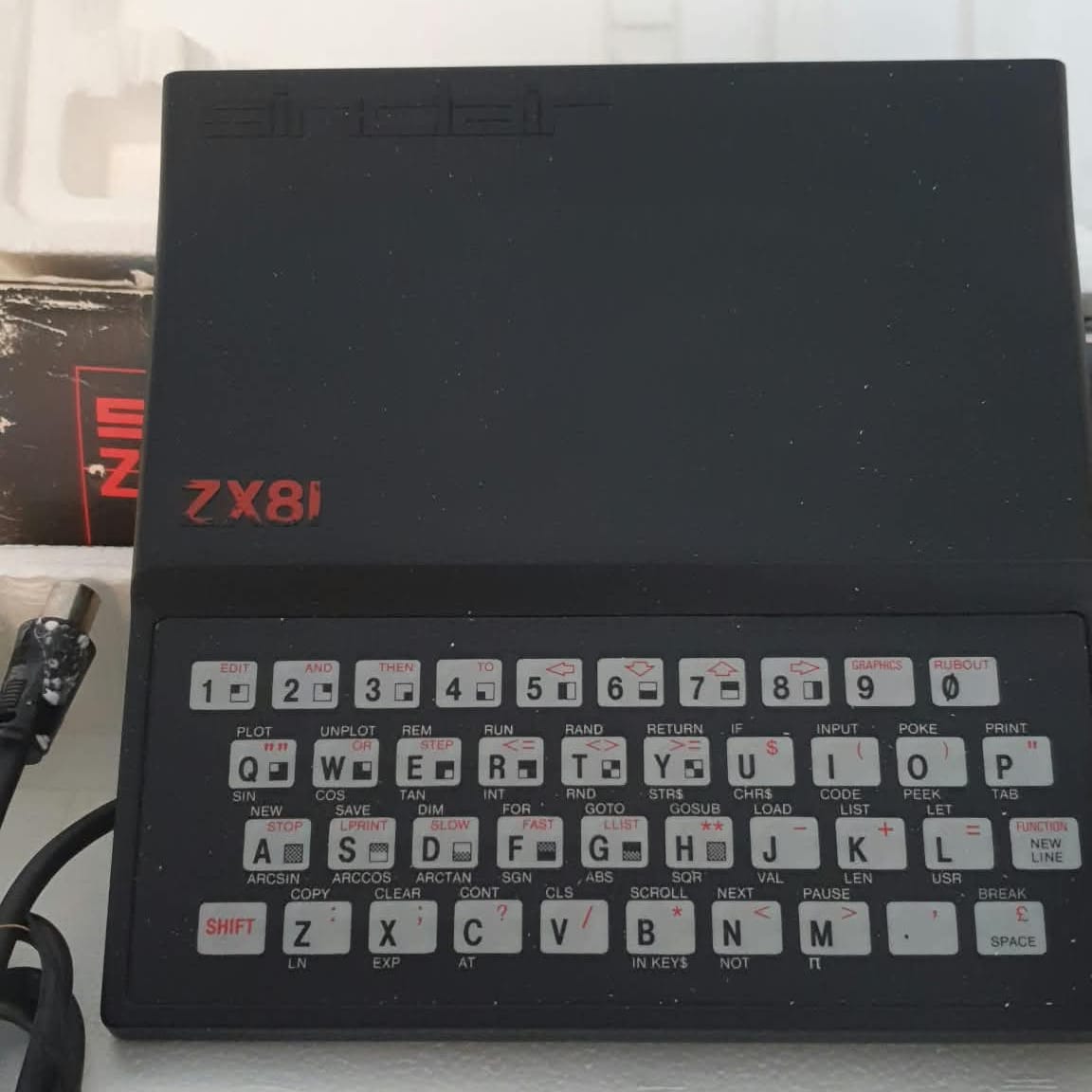
In Standard 9 (Grade 11) he saved up for his first computer, a ZX81, the Sinclair machine built in Dundee, Scotland by Timex, bought for a hundred and seventy-eight rand and still in its box behind his desk. Before he could afford it, he'd stand for hours in the local Dion's, keying a program into the display model until it ran.
He soldered on a memory expansion off a magazine circuit, found the built-in Beginner's All-purpose Symbolic Instruction Code (BASIC) too slow and too cramped, and dropped into machine code, learning the Zilog Z80 chip so thoroughly that he can still recite its raw instructions. Ninety in hex, he'll tell you, is a no-operation. He learned it from magazines like Elektor, because the books at the library and the bookstore ran years behind.
By the time he reached the University of Pretoria to study electronic engineering, the institution of that day was running behind him too. He'd arrived expecting someone to throw open the curtains on the world he'd been watching through a pinhole, and instead the first year was pretty much all maths, physics and chemistry. When programming finally came around, he already knew the bytes they were introducing.
Rautenbach does credit university for giving him a solid entree to compilers, the tools that let you write something close to English and have the machine work out its own instructions underneath. Because he already grasped what sat under the English, he could write tighter code than the compiler managed and see where it was weak.
Later, in professional practice, he'd tell a younger colleague to swap two lines to make a program run faster, and they'd ask how he could possibly know. He knew because he could still see the machine beneath the words. Often, they'd started higher up without that view in their mind’s eye.
There's a popular sensibility going around at the moment. It’s an inference that the machine writes itself, so why bother learning to code at all. Rautenbach hears that more as a narrative than a fact, and answers with a Formula 1 metaphor. Say you want to race, but if you don't (care to) understand the engine or the mechanics linking the steering wheel to what's under the hood, you aren't likely to be much good at it.
He’s emphatic that it cuts the other way too. He's watched hardware people who never crossed into software stay hunched over a soldering iron until the thing they built is scrap and they go with it, and software heads freeze at the layer they learned first, still writing assembler in the nineties because that's where they were comfortable.
He confesses to nearly becoming one of them. Buried in low-level Basic Input/Output System (BIOS) work through the nineties, he almost let the internet pass him by. Around 2000 he stopped, took a sabbatical of a few years to punch up his electronics, networking and programming into the next generation.
He nearly missed the mobile wave the same way, and closed the gap by looking over his Zapper developers' shoulders, where he led on product development, until, by about 2019, he was writing his own first Android app.
Rautenbach carries a longer (and deeper) memory than many in today’s tech scene. AI has been here since the 1960s, he points out, and every decade or so a wave arrives that gets sold as a clean break with everything before it, but seldom is.
We are, to my eye, back at one of those hardware-meets-software thresholds he lived on as a boy, the software now climbing into robots and machines that act in the world, the old seam between the two dissolving in ways it hadn't yet on Flight AS-202.
Over at least two more pieces, I'll probe the capitalist validation of his expertise as evidenced by the till ringing around ABSA's Payment Pebble, the QR rails at Zapper and the hardware-and-software stack that runs from Thumbzup to his current project dubbed AuthGate.
There's also his early enthusiasm for blockchain tech, and the time he says he solved in six weeks of hand-written assembler what US software giant, Novell, had spent three years failing to crack, then licensed the fix back to them for a small fortune.
Editorial Note: A version of this opinion editorial was first published by Business Report on 01 September 2026.