
OP-ED - Whose (fintech) rails are these anyway? Notes from a Hong Kong week of trams, card taps and blueberries
A candid dispatch that takes stock of the everyday fintech infrastructure behind Hong Kong's digital transformation, with flags worth minding as (South) Africa builds its own rails.

At the weekend, I had the good fortune of getting to buy an official Laurence Lai photo film reproduction from the artist himself.
Lai happened to be at his Peak Tower gallery in Hong Kong when my wife, Sithabiso (S'tha), and I popped in. He’s spent decades documenting the city's changing streets and skyline.
According to the citation on the back of the print, he shot the picture I copped in 1998 on a Nikon F90 loaded with Kodak T-Max 100 black-and-white film. The image captures the underbelly of what appears to be a Cathay Pacific jumbo jet skimming a Kowloon City street crammed with trucks, taxis and restaurant signage, on final approach into Kai Tak Airport. And now it's headed for our home office.
As it happens, Londoners can catch Lai's work at the Affordable Art Fair in Battersea Park from 14 to 18 October.
The last time I was in Hong Kong was 1992, six years before Lai took that photograph. The flight my family and I were on would have followed the same challenging aerial approach, into a Hong Kong still under British administration.
By the time the picture was taken, the UK had handed Hong Kong back to China, and Kai Tak was in its final months. The last passenger flight out of Kai Tak was Cathay Pacific's CX251, which left for London at two minutes past midnight on 6 July 1998. The lights went out at 1.16am, as staff worked through the night to move operations to the new airport at Chek Lap Kok, built on reclaimed land. That's where we landed last week, in what is now a Special Administrative Region of the People's Republic of China.
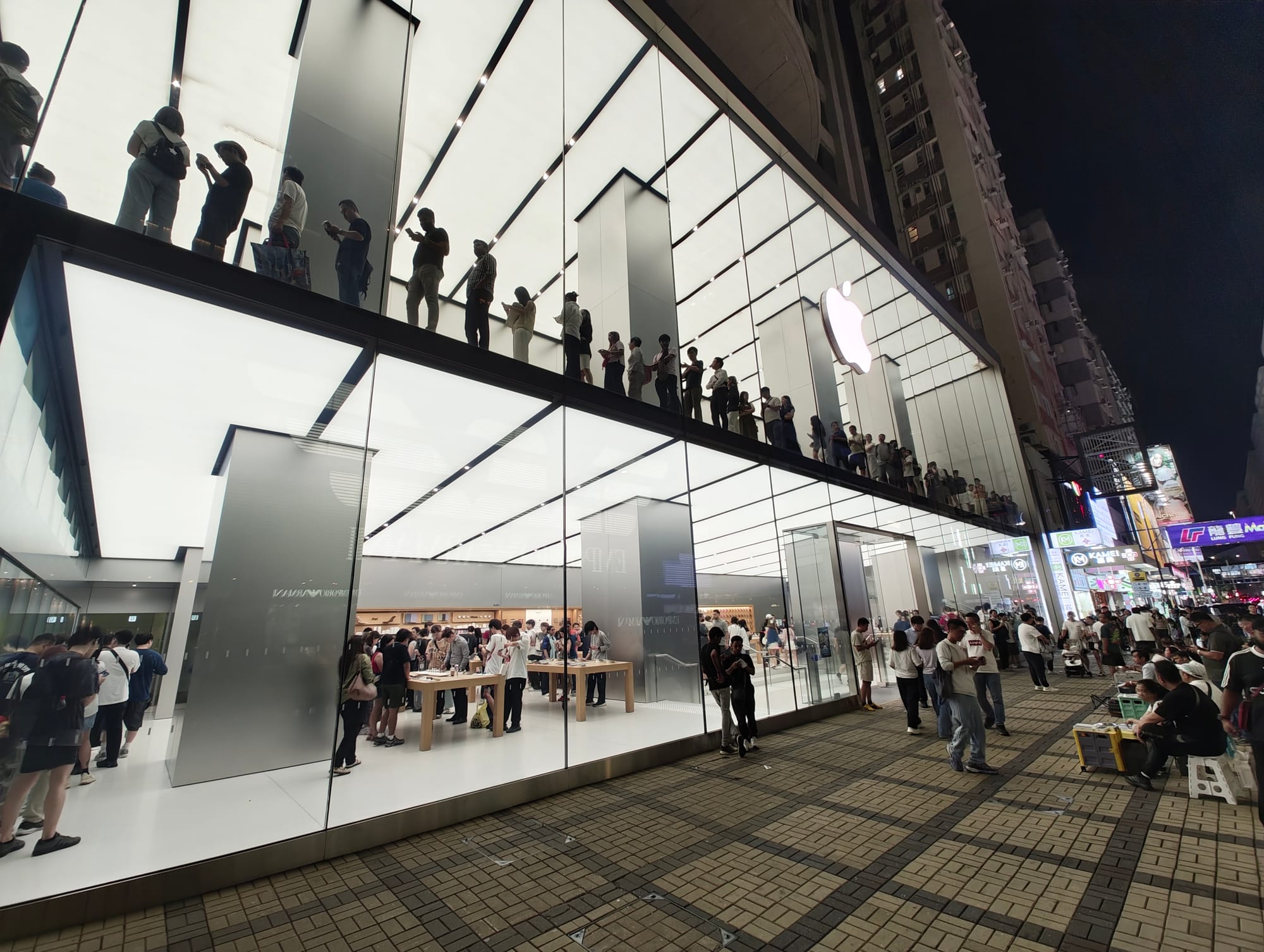
Walking past Apple's Canton Road store in Tsim Sha Tsui last Wednesday (23 September), we saw queues inside run much longer than the one S'tha and I joined in Tokyo this time last year. Turns out the iPhone 18 Pro and Pro Max went on sale on September 18th.
In Tokyo, the scalpers I saw played it cool in the shadows, appearing to pay vulnerable locals to hold places in line. Here, resellers traded openly on the pavement, calmly and confidently standing by to relieve the thirst of desperate, time-pressed seekers of Apple's latest devices.
 Andile Masuku
On launch day in Hong Kong, The Standard reported opportunistic resellers turning the plaza outside Causeway Bay's Hysan Place into an impromptu trading floor, with a 512GB Pro Max attracting buyback offers HK$2,300 (about USD 295) above its official price. When the foldable iPhone Duo goes on sale here, one can only imagine the scenes that will unfold.
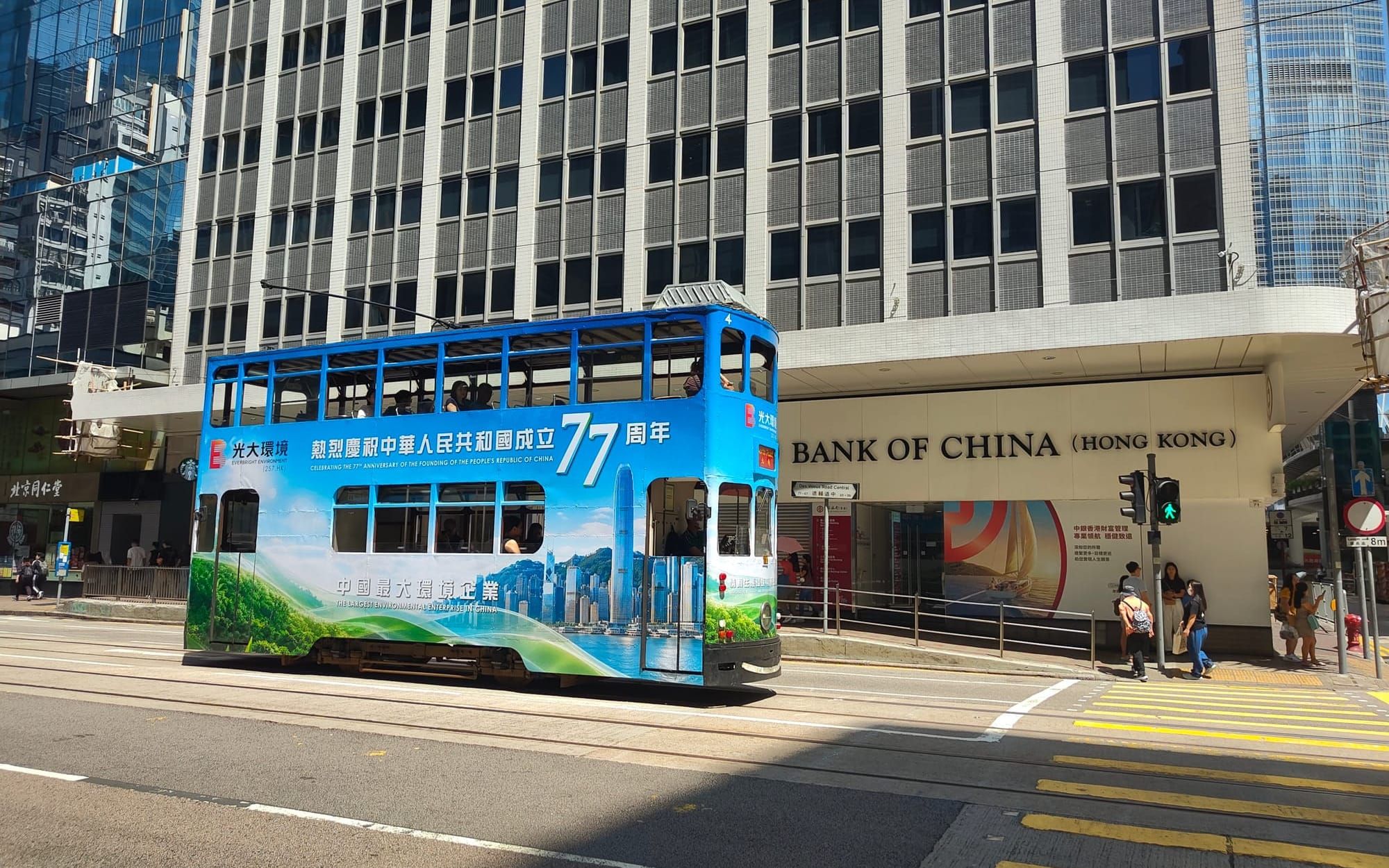
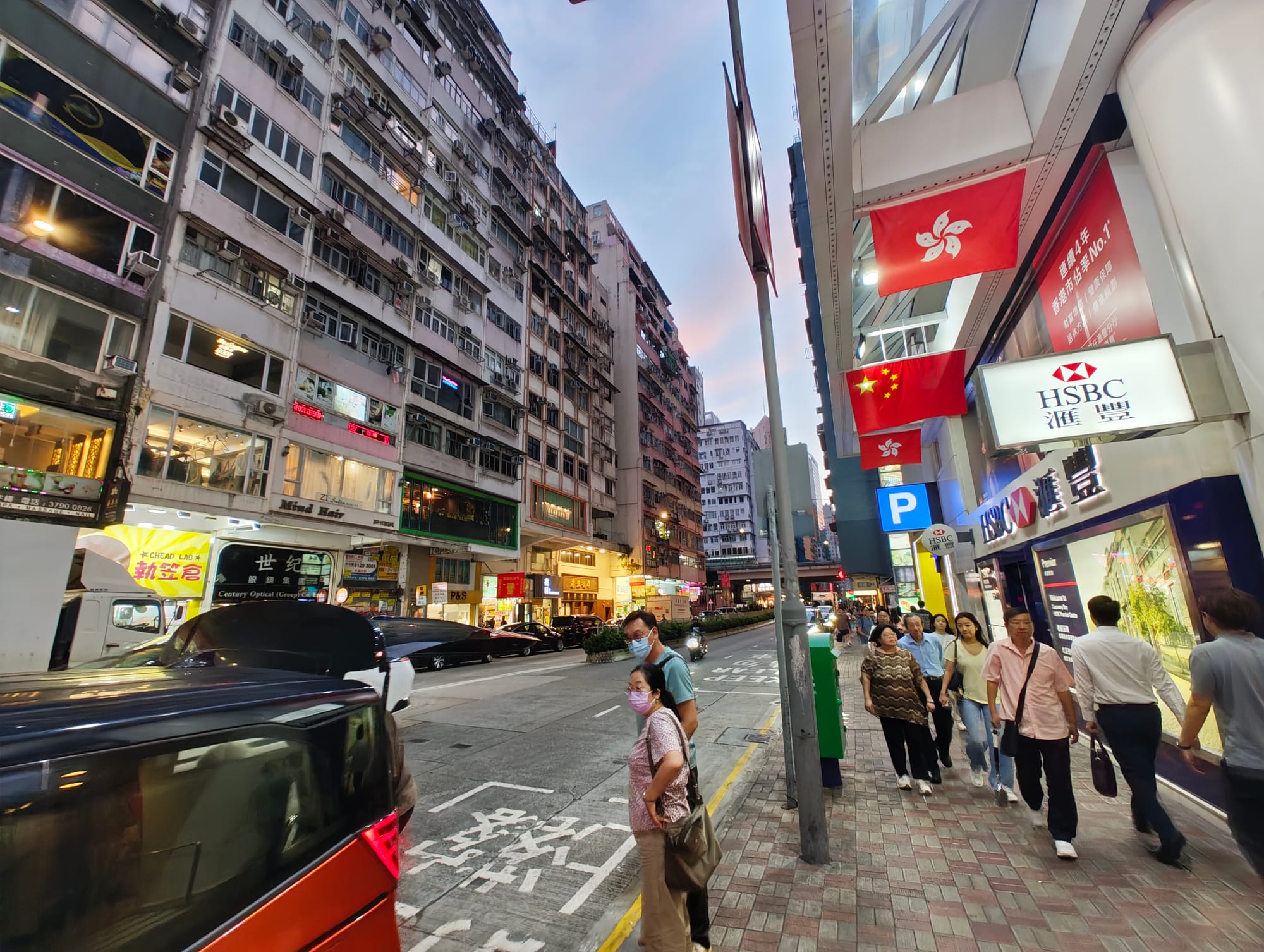
While Hong Kong is decidedly 'not China proper' in mood and feel, reminders of whose island city this is aren't hard to find. Several of Hong Kong's historic trams, affectionately known as "Ding Dings", are wrapped in adverts from Everbright Environment celebrating the 77th anniversary of the founding of the People's Republic, which falls on Thursday. And outside an HSBC branch in Causeway Bay, I spotted Hong Kong and Chinese flags hanging side by side.
It's easy to forget that HSBC stands for The Hongkong and Shanghai Banking Corporation, founded here in 1865 by a certain Thomas Sutherland to finance trade between Asia, Europe and the Americas. The bank still headlines the city's international commercial aspirations. However, by assets, it now sits eighth in the world, dwarfed by four mainland Chinese banks at the top of S&P Global's latest ranking, not least the Industrial and Commercial Bank of China, the world's largest at USD 7.65 trillion.
Then there's Octopus, aptly named for its tentacled reach into everyday life in Hong Kong. The fintech platform, headlined in consumerland by a contactless card and mobile app, works alongside Visa, Mastercard and the rest. At one of the small family-run restaurants we ate at, the choice was Octopus, Alipay or cash. Incidentally, cash-only is still a common feature of everyday retail.
Octopus has been a thing since 1997 (a decade before M-PESA launched in Kenya). Its majority owner is MTR (Mass Transit Railway), the rail operator, with a 64% stake. And the Hong Kong government owns about 75% of MTR.
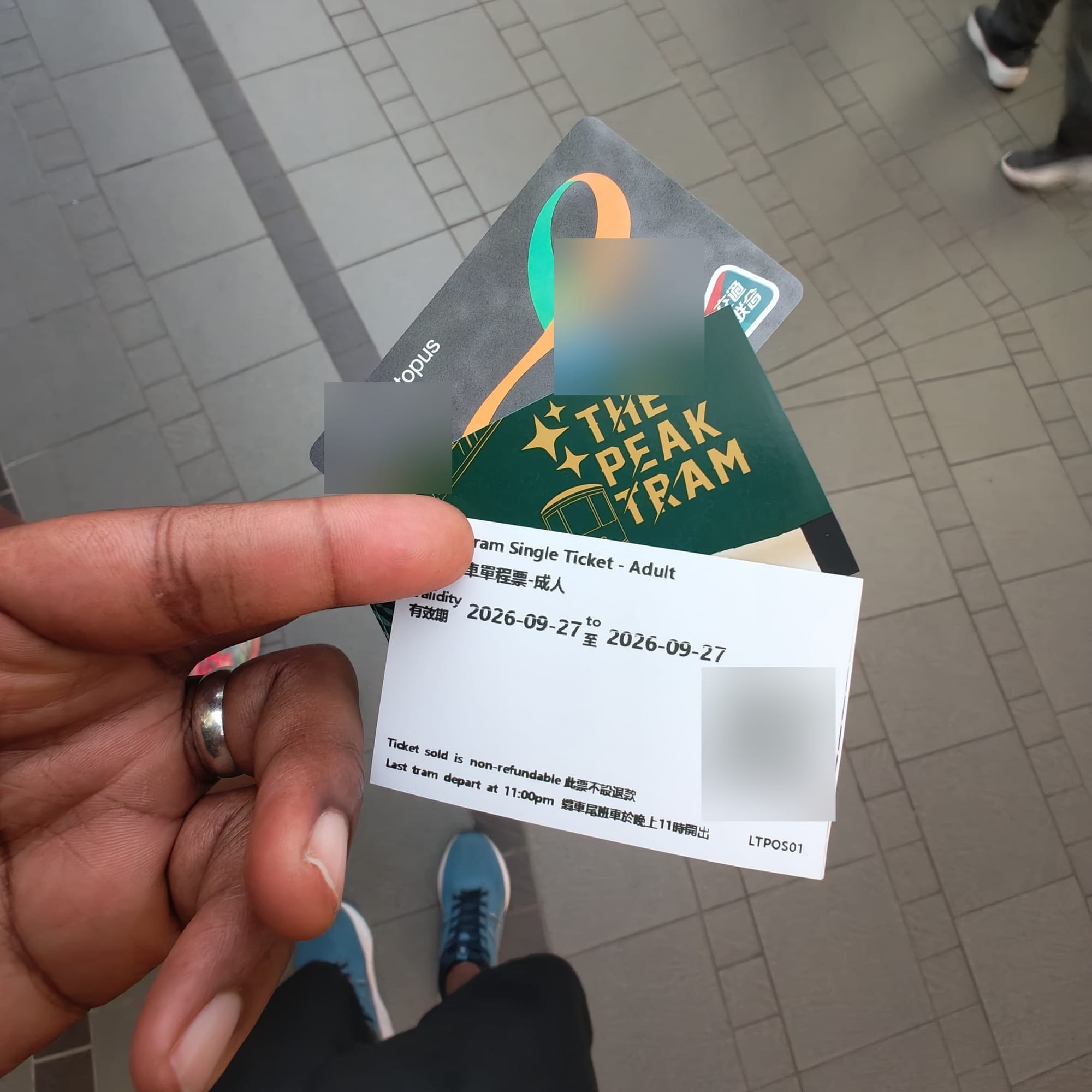
Riding the steep Peak Tram funicular up to Sky Terrace 428, I discovered you can't use your Octopus card to pay for someone else's fare or entry. Octopus's own guidance tells visitors not to share cards, because an Octopus "cannot be used twice within a designated time period". For transport and controlled-entry contexts, that's basically one card, one person.
It got me thinking about how centralised financial inclusion mechanisms could one day be used to impede civil freedoms. Hong Kong locals have already proved wary of the telling traces that a card tap leaves behind. During protests in 2019, Quartz reporter Mary Hui watched long queues form at the cash-only ticket machines at Admiralty station, as protesters avoided their Octopus cards for fear that the data could be used as proof they had been there.
Posters for Hong Kong FinTech Week, happening in November, hang in prominent public spaces around the city. A visit to the event website suggests the fintech scene here has moved past filling the convention centre for the vibes. A general pass costs USD 499, an investor pass USD 1,039 and an executive pass USD 2,299; startups pay USD 219.
Avid mingling mavens reading this may or may not be delighted to know that every registered attendee gets access to a personal AI networking agent named Samantha.
Were I attending, I'd be rather keen on the gathering's USD 800 add-on (discounted for Executive Pass holders) to join a two-day executive tour of Shenzhen on 4–5 November, with company visits and a return coach from Hong Kong. Mainland visa arrangements are left to you, mind.
No doubt, even at a glance, Beijing's strategy of keeping Hong Kong positioned as an internationally open commercial hub next to the mainland intrigues.
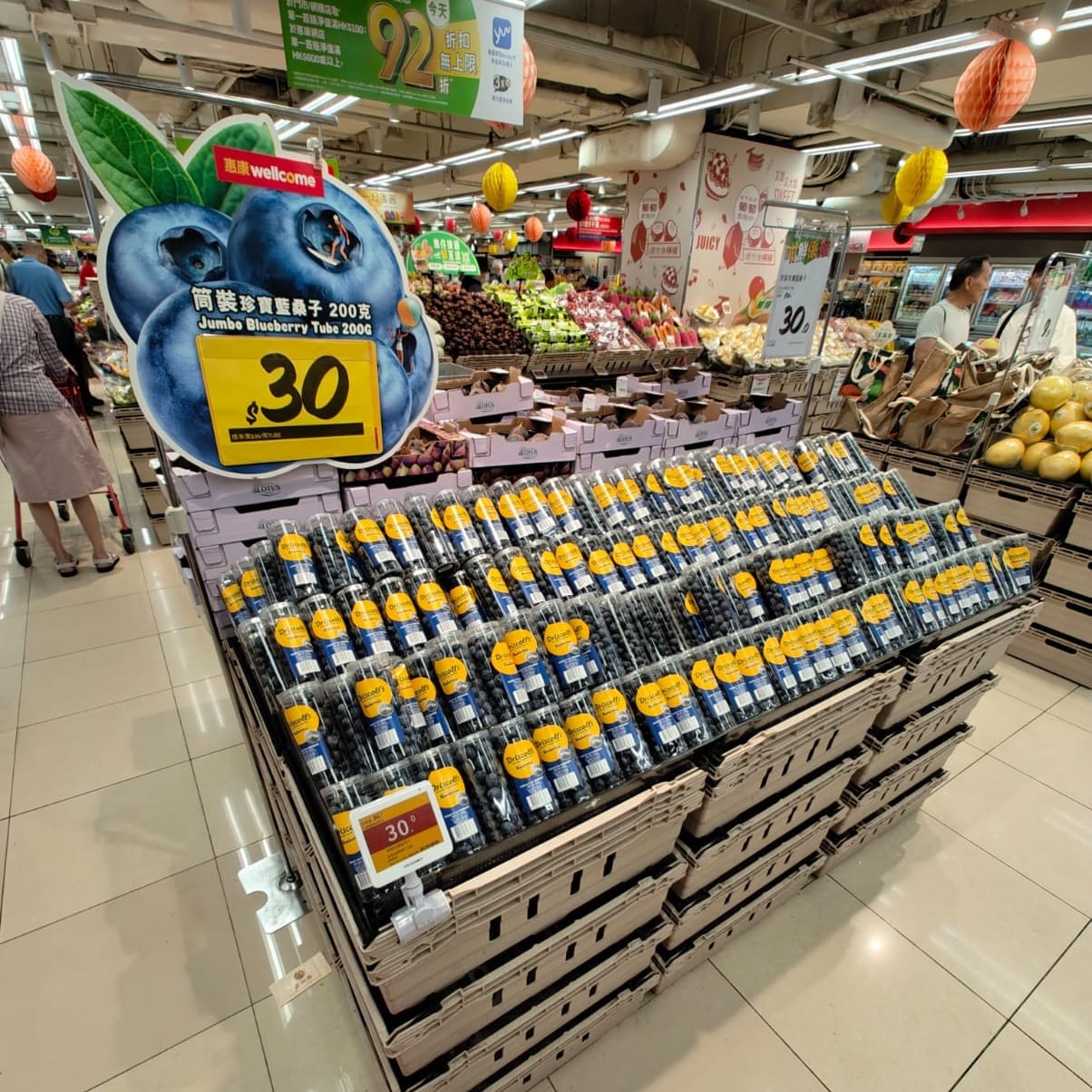
In other news, round the corner from our hotel on Hong Kong Island, the neighbourhood Wellcome supermarket...
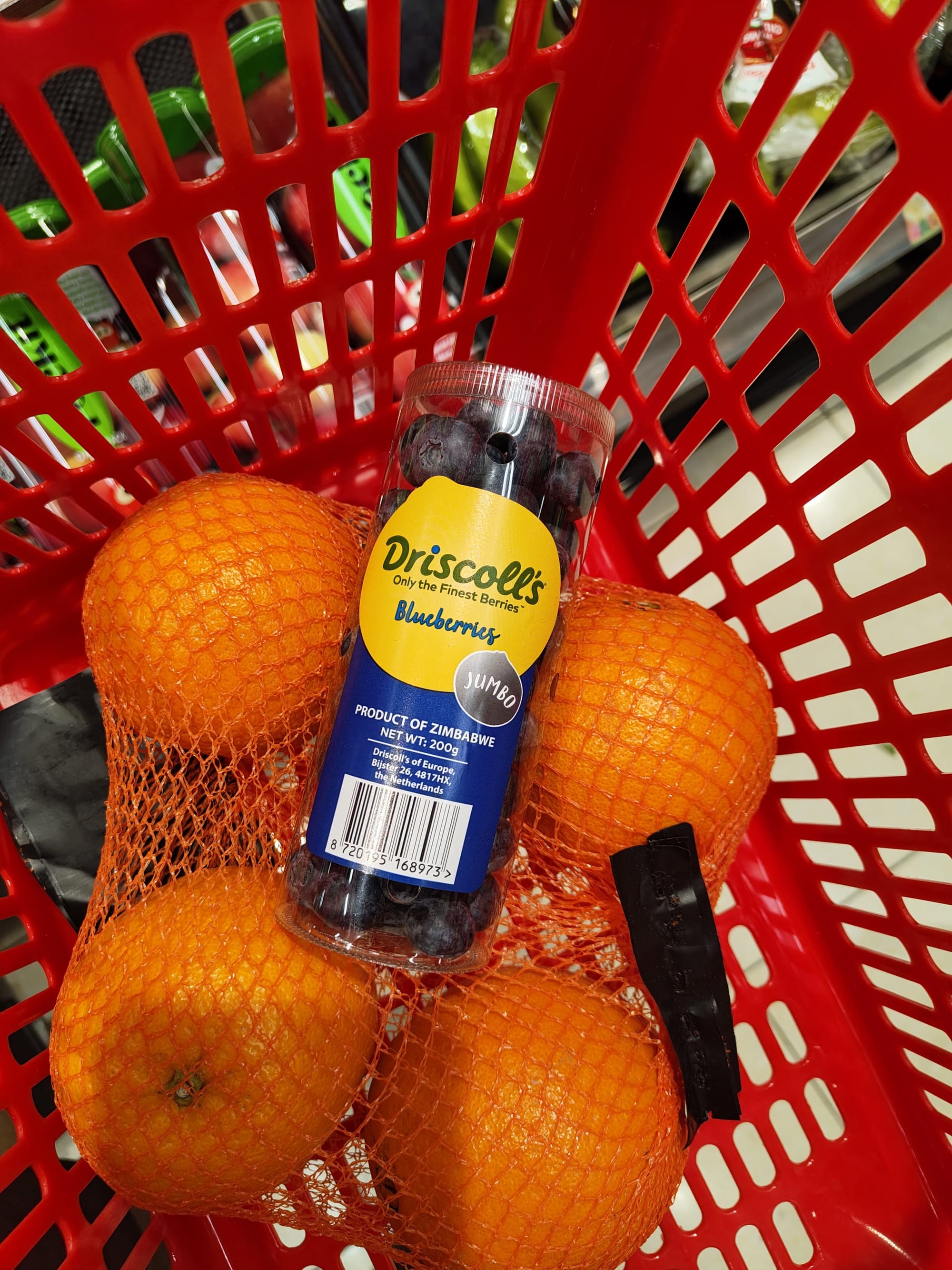
Into my basket went a net of some of the thickest-skinned, easiest-peeling, juiciest navel oranges I've ever had. I spotted "South Africa Late Navel" on the Californian Suntreat citrus sticker. Jamming alongside them was a 200g tube of plump "Jumbo" blueberries, labelled "product of Zimbabwe" and marketed under Driscoll's with a Netherlands address on the label, for HK$30 (about USD 3.85). Even the berry discount I peeped in-store ran on rails, with 8% off that day for Hang Seng enJoy cardholders. Hang Seng Bank is part of the HSBC group.
Fun fact, according to industry figures, Zimbabwe is now Africa's third-largest blueberry producer, behind Morocco and South Africa, and apparently one of the fastest-growing in the world.
South Africa is of course trying to build its own sovereign digital (read fintech) rails. President Cyril Ramaphosa used February's State of the Nation Address to promise a national digital ID before the end of 2026, under the government's MyMzansi digital public infrastructure roadmap.
We will harness digital transformation as a driver of growth, inclusion and effective service delivery. This year, Home Affairs will launch the Digital ID to enable safe and secure use of digital services for all South Africans. #SONA2026https://t.co/YGByKBYyIJ
— Cyril Ramaphosa 🇿🇦 (@CyrilRamaphosa) February 12, 2026
By April, however, Home Affairs was pointing to the 2027/28 financial year for the system's full operational launch, with the enabling bill still to go to Cabinet. PayShap, the instant payment rail run by PayInc, is moving faster, with 905 million transactions by May, which is nearly double its tally five months earlier.
It's clear that Pretoria, like other African capitals, is trying to figure out what socioeconomic sovereignty looks like amid a global consolidation push into fintech and AI. My brief observations in Hong Kong suggest that the fintech rails everyday citizens use to keep their lives moving are the infrastructure plays to watch. Who builds and stewards them, and on what terms?
I'm typing this dispatch from our hotel room a few hours before checkout, hoping, perhaps naively, that our British Airways aircraft is among those already fitted with Starlink, so I can join a webinar a few hours in. If it is, I'll be online courtesy of satellites owned and stewarded by…
Editorial Note: A version of this opinion editorial was first published by Business Report on 29 September 2026.